• Beautiful tribute from Heyday Books to its founder & his legacy – a legendary publishing house started by Malcom Margolin who passed earlier this year. In another life, perhaps being a publisher who curates beauty and brings it to the world would be a worthwhile life to pursue. Watch the tribute – much to be found there.

    Wise old man, a romantic perhaps or someone who recognizes the complexity of the world and the limits of the human endeavor to change/shape things. The last lines of the tribute are beautiful and worthy of a publisher and writer who recognizes that the pen and the imagination it stirs may be the place the battle for the human condition is won or lost.

    Malcom Margolin (edited/corrected transcript of video):

    Many writers say they’ve never gotten the recognition they deserve. I certainly can’t say that. I’m the most over-appreciated person in the world. I’ve received many awards. I’ve been given credit for skill, credit for savvy, credit for hard work, and keen vision.

    But the fact of the matter is that I’ve been lucky. When I was a kid, my vision was to be an ice cream truck driver. I pictured myself stopping at street corners, getting crowds of people together, opening up an ice chest, pulling out all sorts of treasures and giving them out to people who will be happy and will like me – in some way.

    I think that publishing is a glorified ice cream truck. I go around and I collect beautiful things and store them away, then bring them out and give them to people and they like me.

    One of the main things that I’ve gotten out of hanging out with Indians for the last 50 years has been a sense of the greatness of the people. I think there’s several characteristics of Indian aesthetics.

    One of them is that the world wants to be beautiful and that people are there to serve the world in its desire to be beautiful and that the beauty is inherent in the world around you.

    It’s not part of your own humanity. That what you do is you go out and you make yourself available to the beauties of the world. And I think there’s a passivity to that that’s wonderful. It’s not something that human beings are adding to the world. It’s something that the human beings are drawing from the world. And your job is to be open to it and to receive it.

    One of the things that I’ve loved about being around Indians is the sense of place and the sense that knowledge is too important to entrust with human beings. You embed the knowledge in mountains. You embed it in animals. And when you go out, the world tells you stories.

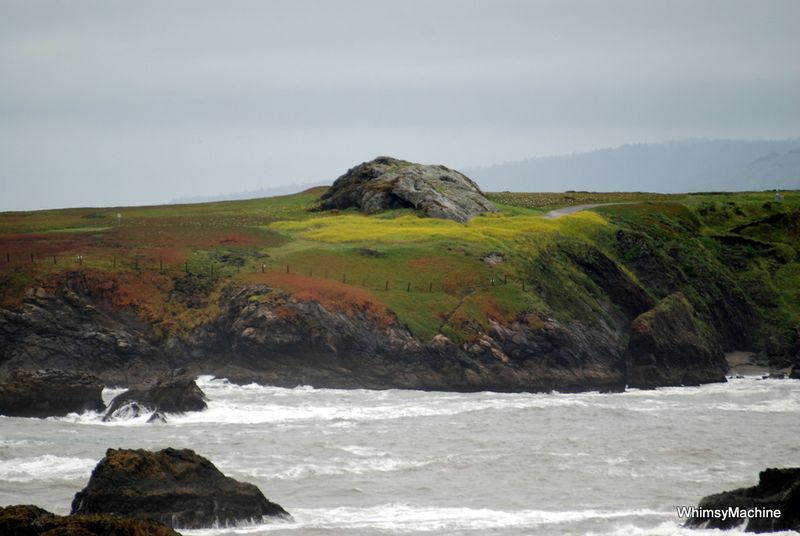
    And I go over to these Indians and that particular rock over there may have been a person in a previous lifetime. They knew the story of that rock. That particular place had powers and this particular place had history and there were these stories that were attached to place and it gave you a sense of who you were. I think stories need places to embed themselves in to give them reality, to give them some kind of sense of rootedness in a particular place.

    Without that you end up having generalizations. You end up having ideologies. You end up having dogmas and tenets. We need these places to tell us who we are and to tell us that Berkeley is not just a place that began 200 years ago when white people moved in, but it was a place that had existed for a long time.

    For me, one of the big changes I’ve seen in my life as a publisher has been the increasing use of salesmanship in our language. And salesmanship has affected our language so that we don’t know how to talk to one another without selling something. It’s embedded in our tone. It’s embedded in our way of being. It’s embedded in our grammar.

    We use language to conquer the world. We use language to define things. We use language as a way of getting power over things.

    This whole business of making America great again is so reprehensible. If you talk about winning, you’re just talking about life as a game and life is not a game. Life is something else. And I think we have to get to this other sense of what life is all about. And we’re not going to get to it through winning. We’re not going to get through it with losing either.

    We’re going to get through it by following an artistic way, by following a spiritual way, by having something that is different.

    There’s a sense of uncertainty that you get from these older generation of Indians where there’s the sense that they have is that the world is bigger than our capacity to understand it. So we have this sense that human beings can understand everything that we can go out and pursue knowledge and get it.

    With Indians the sense of the world was it was big it was mysterious there were things we don’t know about and maybe if we’re lucky the world will give us a gift of this understanding and I think there’s something in that uncertainty that I just love. You’ll talk to an old Indian and you’ll ask who made the world and he’ll say “maybe it was coyote I think”.

    It’s not the certainty that it was coyote, it’s maybe it was coyote. And then you’ll say something like the people in the next village said it was silver fox and the Indian will say well did they say it was silver fox? Here we say it was coyote.

    In Europe, you would have had a religious war in which three million people would be killed to figure out whether it was silver fox or coyote.

    There it just it’s not important because the world is an inherently mysterious place. It’s inherently unknowable and your place in it is not fixed. You don’t have rights in the world. The world is a gift.

    And I think for me the gift of the world is the sense that the world is not owned by people that we don’t have rights to it. That it’s a gift to us, puts us in our place and it’s a beautiful place to be in. I think it’s a truthful place to be in.

    I think Indians use language as a way of expressing wonderment and poetry and ambiguity and for me it’s something we have to learn. What I’m looking for is a doorway to open people’s imaginations. And I think the battle we are fighting will be be won or lost first in the human imagination.

  • Kashmir Visit with Parents – Stunning Vistas, Culture and History

    In 2023, I faced a set of choices – to bootstrap a company in the AI/ML space that would focus broadly on misinformation/deception (think deep fakes, AI based phishing, viral misinformation) or to retire early to spend time with my parents who are almost 90 years old.

    They have a rich life in India and while they enjoyed coming to the US, they had always resisted the idea of migrating away from India. Given their age, it was harder for them to travel every year and when I visited, it was harder to leave each time.

    It wasn’t a very hard decision to make. Doing yet another startup while tempting would not add as much to my life. I was fortunate to have the means to make that decision – not everyone does. So my wife and I moved to India in December 2023 where we make our home with my parents. My mother still runs the kitchen, they still drive on occasion and both retain a zest for culture, travel and life that I can only hope to emulate as I grow older.

    So far I’ve resisted the urge to plunge into work full-time (some tempting invitations to run incubators, join startups, etc) and it has been an interesting shift to say the least. I continue to mentor startups and help the odd startup from Skydeck at UC Berkeley and am on some VC/Hedge Fund type advisory boards.

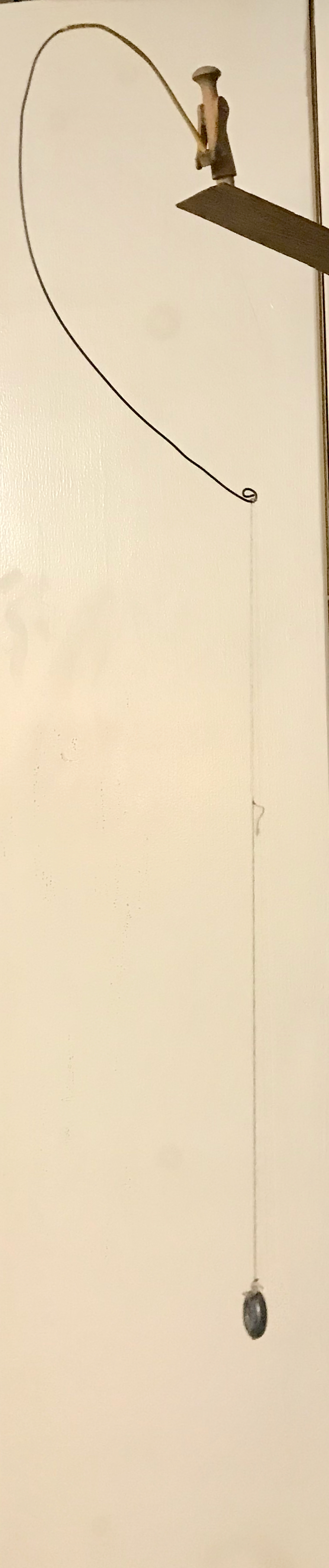
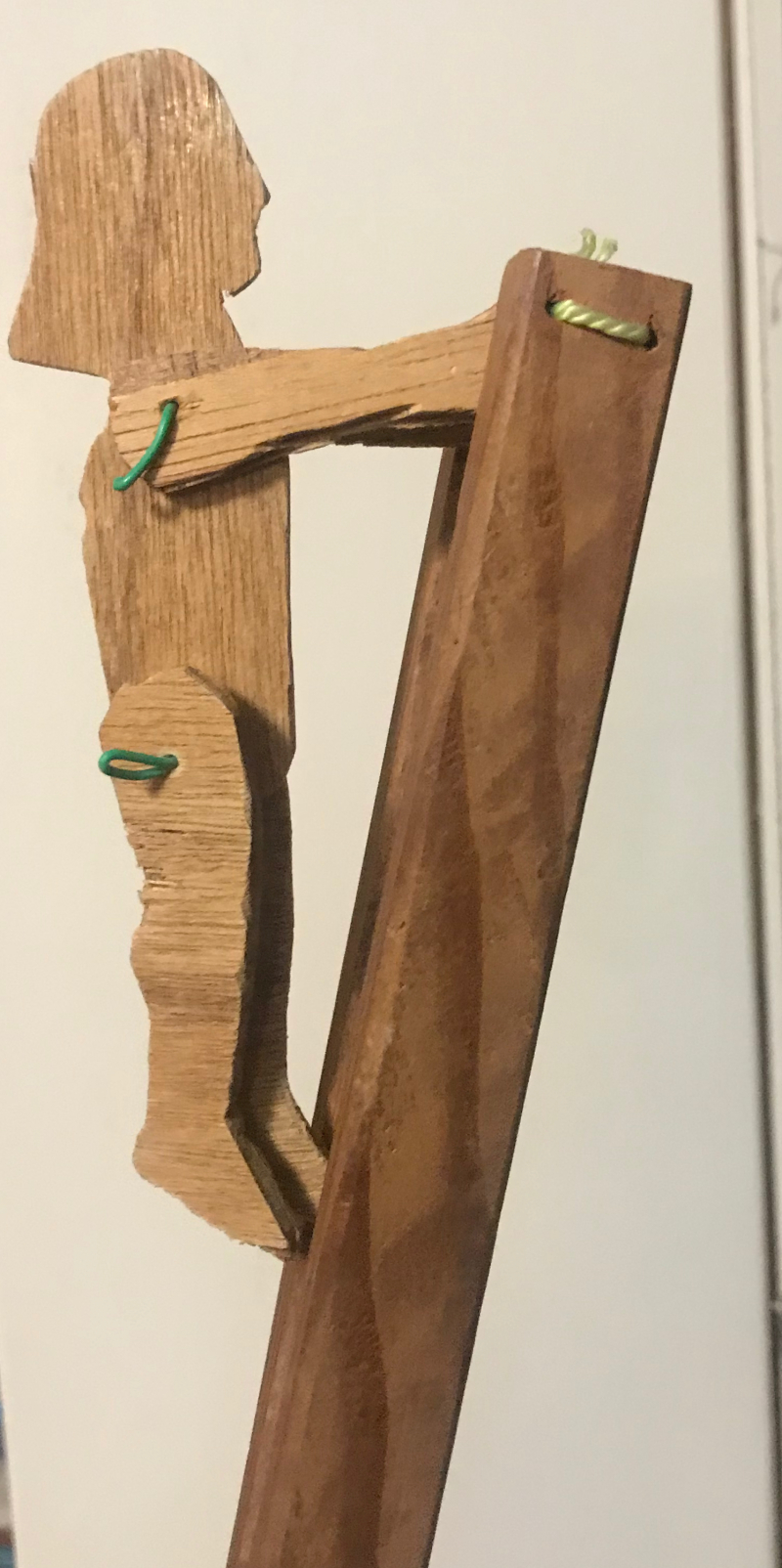
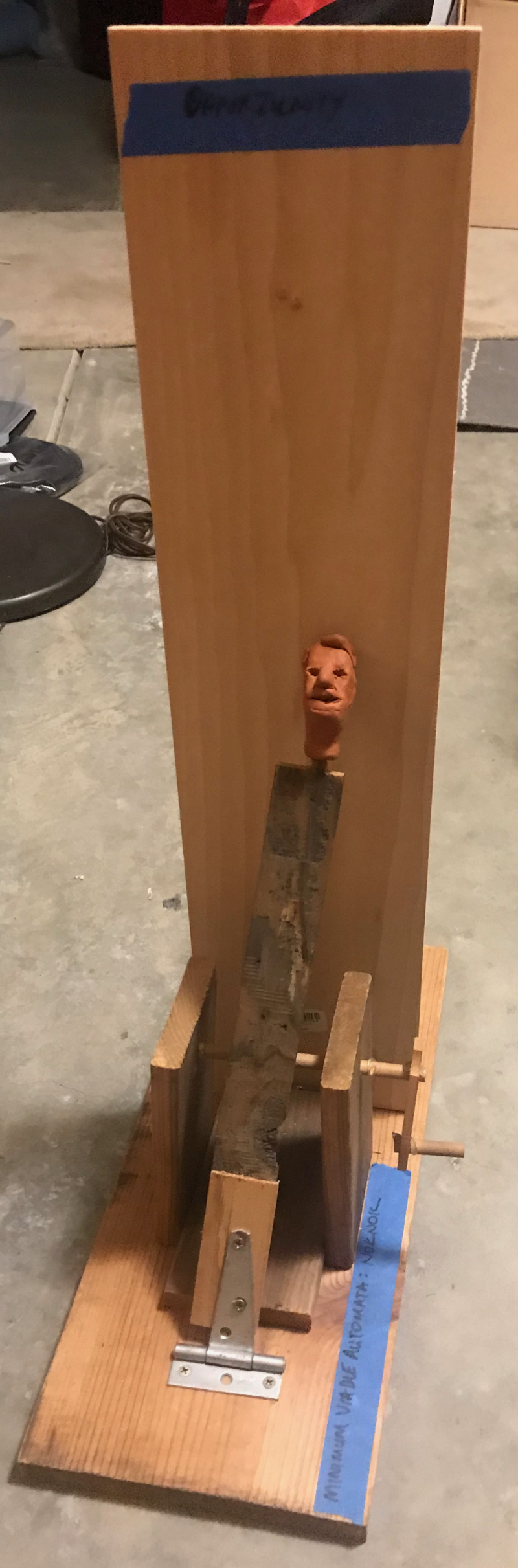
    I’ve been able to spend more time reading, working on toy design and am slowly learning to introduce myself in “future tense” rather than “past tense”. “I am an aspiring automata/toy designer” vs. “I was a Silicon Valley entrepreneur.”.

  • IMG_4767

    Its been an interesting few years on the personal & professional front – here’s a brief catch up.

    Over this span of time:

    • I moved from Palo Alto to Berkeley (more books, music, art, theater, good food, non-tech people, nature & a grand view of San Francisco Bay).
    • Created with a group of colleagues & friends, a global security standard for authentication of users & devices called FIDO (WebAuthN, UAF) to replace passwords, a non-profit standards body the FIDO Alliance, now chaired by Google, Microsoft & other leading lights.
    • Bootstrapped a commercial company Nok Nok Labs that provides phishing resistant authentication based FIDO & additional IP to some of the largest brands worldwide with more than 150M+ users. 
    • Joined the board of the Girl Scouts of Northern California to work on STEM education strategy following the work on the all-girls Robotics team The SpaceCookies (collaboration of NASA & Girl Scouts).
    • Mentored a half dozen startups such as KRISP/2Hz (ML/AI for Noise Reduction), 4axyz 3D Manufacturing (3D additive manufacturing of Wood Objects) and others and ongoing mentoring through SkyDeck, the UC Berkeley accelerator.
    • Developed a half-dozen automata (kinetic sculpture) & toys and met a whole community of tinkerers and automata enthusiasts from around the world.
    • Hung out at a dozen live music festivals in Grass Valley, Killarney & Sebastopol among others, went to countless house concerts, and live performances at the Freight, Backroom, Ashkenaz, La Pena and other delightful venues.

    …so yes, a busy few years.


    IMG_2619 IMG_2621 IMG_2620

  • Stanford confirmed that Prof. John McCarthy passed away peacefully at the age of 84.  John was a familiar figure when we lived on the Stanford campus, bicycling around with his shock of white hair and beard – every bit the mathematician-professor-wizard (see Wikipedia entry) outlined in "What the Dormouse Said".  John leaves a huge legacy of inventing Lisp (the programming language) and being one of the pioneers of AI (Artificial Intelligence) among his other work in formal systems and laying out an early vision of utility computing.  See this little paper from 1958 for some of the glimmers of what that early vision of AI was about: 1958 Paper on the Advice Taker and Artificial Intelligence and his little FAQ on AI

    CIMG0784

    The last time I saw him was at the O'Reilly Etech conference in 2008 (pictured above).  John was ever the skeptic of the modern AI approaches embodied by Google and other machine learning efforts, holding out for a lofier vision of AI embedded in the early symbolic approaches that we are still many years from achieving. 

    My personal career change from chemical engineering to software happened in part due to a math class called "The Garden of Lisp" taught by a very enthusiastic Prof. Richard Stark at USF who'd spent some time with John.  The class went from logic to lambda calculus to the frontiers of computer science at a dizzying pace and Stark related with relish some of the lore of math and computer science involving heady stories of characters like Alonzo Church, John Nash and of course, John McCarthy.  The class animated an obscure subject and inspired my early adventures as a Lisp programmer.  In that sense, I owe John McCarthy for the first and best business title I carried as a Lisp programmer at an AI company in Silicon Valley  – "Knowledge Engineer" – Never been able to beat that one.  Thanks John!

  • Unhappy_Mac_big_normal Stewart Brand once said that the difference between east coast and west coast intellectuals is that on the east coast an intellectual is someone who says things, writes things and the product is usually a book.  Out here on the west coast, he said, we do that too, but we also build things.

    If there was something that epitomized Steve Jobs, it was an incredibly ferocious drive to build things that were fiercely intentional.  In that, he was a West Coast intellectual and Maker who left a stamp on the world. 

    I never worked at Apple or met Steve in person though we saw him occasionally in and around Palo Alto.  My earliest memory of him was reading about Wozniak and Jobs in Newsweek as Apple went public in the late 70s.   I was in India then without any real hands-on sense of what a personal computer was but the story of these two young guys on this crazy adventure struck in my imagination though and seeded the siren call of Silicon Valley.

    When Apple launched the first Macintosh, I was in Florida and spent hours at the Sears store ("Test Drive a Macintosh") and was blown away in relation to the IBM PCs, Symbolics and Prime Workstations I was working with. While never a fanboy, I admired the thought and craftsmanship that went into the many Apple products I owned over the years (MacSE, Powerbook 180 etc.) – as great blends of form and function – not perfect but definitely intentional compared to the "absent-minded, after-thought" design of the alternatives.  A few products came close – the Go Tablet, the early RIM devices, IBM ThinkPads but most of those lost their way and slowed down.

    Jobs was one of the many colorful characters that inhabited a very small ten square miles in Silicon Valley that I arrived into in the mid-80s and I count myself lucky to have lived, worked with and around people like him who blended their craft with counter-culture (in AI, Security and User Interfaces).  John Markoff's book: "What the Dormouse Said" captures nicely some of the early influences that might have touched people like Steve as they grew up in the valley.

    As a young engineer I read many of the early books about startups in Silicon Valley to puzzle out the culture and trying to understand what it took to build a startup from scratch.  Of the many pieces of wisdom, this one from Steve stuck with me and gave me the courage to trust my instincts with thousands of little decisions you make in bootstrapping startups where analytics are little help and can be paralyzing.

    "You make a lot of decisions based on the fragrance or odor of where you think things are going" – Steve Jobs, 1984 in "The Little Kingdom" by Mike Moritz talking about building the early Apple.  RIP Steve, I'm sure you'll be tinkering around whereever you are.


    *Credit to rbanffy at tweetlevel for the unhappy mac image


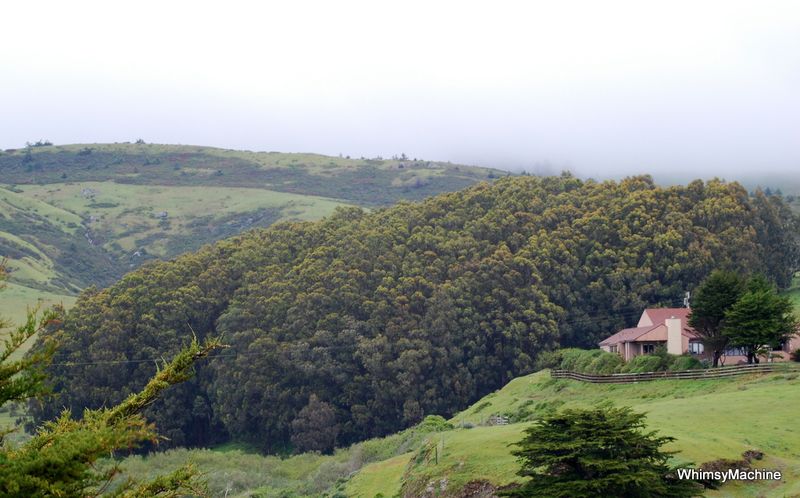
  • Much overdue annual spring trip to the coast. Marin/Sonoma coastline in the springtime is something sublime.  Never tire of the sights, sounds and smells.  Good food, great views and nature always puts on a great show (rain or shine).

    Bodega Bay Duncans Cove April 2010  

    After a long rainstorm…fewer and fewer places to see a thicket of trees like this…

    BodegaBay Farm April 2010

    House by the ocean to keep dry and watch the weather coming in…a good cup of tea with ginger to keep you warm and a good book to keep company…and time to recharge the batteries.


    BodegaBay April 2010

  • Glad to put the wraps on a year of transitions, some happy, some sad.  Started off the year with an evening hike around an old favorite (and new year semi-tradition) at the Monte Bello preserve overlooking Mount Umunhum, Loma Preita and the San Andreas Fault Line.  

    DSC_0058-1

    Hope to make it to a few good music festivals this year, design/make a couple of new toys/gadgets, get out to the coast more often and maybe get back to cooking/baking after a long hiatus – I feel the itch.

    As Jim and Jesse sung "Pick away on the old banjo and keep that guitar
    strumming, put more water in the soup, there's better times a
    comin…"

  • Long plane rides and walks are perfect for catching up with stored podcasts.  In this case, it was a podcast of "Morning Becomes Eclectic" with an enchanting live performance by "Niyaz" (w. Azam Ali, she of
    "Portals of Grace") on – The bewitching
    live performances of Iranian folk song "the Hunt" (~27 min into podcast) and
    Turkish standard "Beni Beni" (~4 min into podcast) have been spinning in my head for a couple of days.  The group sets a fair bit of poetry (Amir Khusrau) from Urdu and Farsi to a real groove – sure livened up
    the evening walk.  Both the instrumentation and Azam's hypnotic voice set this as one of my musical highlights of the year.

    This last festival season, my ears were opened to some folk tunes from Macedonia (Makedonsko Devojce) and Bulgaria (Sto Mi E Milo) when some of the musicians at the post-festival party spontaneously switched from the Celtic tunes they were playing (the melange of musicians, instruments and improvisation itself was something unique, but that is a story for another time) to these tunes – the YouTube versions don't do justice to the uptempo jam but you can pick out some beautiful melodies from the samples. 

    Since then my ears have been pulling me back to Asia-Minor and Eastern Europe to find what I've been missing.  There's a real bit of serendipity here since I had heard Azam's previous CD "Portals of Grace" where she covers some tunes from Eastern Europe and then promptly lost track of the CD – delighted to have re-discovered her.

    Running across from Iran to Egypt, an equally stunning moment last year was listening to the music from a delightful little Israeli film (one of my all-time favorites) called "The Band's Visit" – Ayam Fi Hodnik in this clip from YouTube is an enchanting example of an awesome collection of songs and tunes that litter the movie, some of which are barely a minute in length. I'm still hunting the name of the song that one of old men in the band sings in solo voice at night…who knows what I'll find chasing that one…and so it goes.

  • OCTOBER 12, 2009

    Web Ads Get Tangled in Cloak of Invisibility

    via online.wsj.com

    I don't normally post articles on security, figuring there's enough analysts and commentators who make a living pontificating on the subject, usually providing marginal insight in the echo chamber.  That said, this article on "ad fraud" by delivering ads within a page context without actually displaying the ad (allows fraudster to display one ad and invisibly render another 20-30 (through HTML trickery) and take credit for ad delivery/impressions) is revealing about a very fundamental problem in the security space – That what is displayed, may not be what in fact is executing on your computer.  I last dealt with this problem in the context of electronic signatures – Is this document you're seeing, the one you're signing online?  

    Now there's a whole ecosystem that has sprung up to deter/verify that the ad networks and member/partner sites are actually delivering and someday those companies may be the HNC Falcon(s) of the Web Advertising world.  (Hecht-Nielson's neural net based Falcon credit card fraud scoring system was one of the successes of AI boom in the 80s (acquired by FairIssac)).  But that's not the interesting part here.  The Procter & Gambles of this world won't go broke on ad-fraud but the underlying technology that made this fraud possible is worth some attention and cogitation.

    What makes this more interesting today is that back in the 80s and early 90s, code of completely unknown provenance wasn't pouring into your system every hour by the bucket.  These days even your run-of-the-mill web pages are delivering down not just static content but code that assembles the page within your browser, on the fly from 3-5 different sources per page.  Often the content is well beyond the control of the site you're visiting and so what you're seeing visually on the page vs. what is executing underneath in code could have pretty serious consequences for a range of applications within the browser context which is primarily interactive and increasingly used to complete electronic transactions.  Over the last 18 months, there is increasing chatter about advertisements being the new malware trojan horse (one reason to use ad-filters and utilities like "NoScript").  

    The consequences of such perversion haven't been dramatized in front page news yet and sites conducting sensitive commerce resort to some simple rules of thumb to minimize the chances of problems with their transactions (you're unlikely to see 3rd party content on a bank's transaction pages).  Nonetheless, the area deserves more attention than its getting.

    While some work has been done in this area technically, trustworthiness of code in general and its linkage to user interface elements and interaction remains an interesting problem that's waiting for better solutions in the modern context- Adobe took a crack at this a while ago in their Acrobat platform but seem to have let some of that work slide.  A decent book on the principles and trade-offs (more implied than explicit) of constructing a trusted chain in the context of the h/w and the system software elements supporting it is "Dynamics of a Trusted Platform" by David Grawrock – Intel Press".  Perhaps the next generation of security professionals can evolve the browser into a real trusted platform (there's at least one existing company in the space and several that exited a few years ago).

    Till then – you don't have to fear invisible ads but you should guard against invisible/unauthorized code in your browser.  As a generally prudent measure I'd advise the following:

    • Run an ad-filter with your browser that strips all the crap out (AdBlock, FlashBlock, AdMuncher etc.)
    • Consider utilities like NoScript (pretty harsh) that disables all dynamic content on a page
    • Consider running a dedicated browser (a different one or a clone of your favorite) for your "secure transactions" – if you're really paranoid, run a dedicated machine – all to minimize potential for malware contamination.
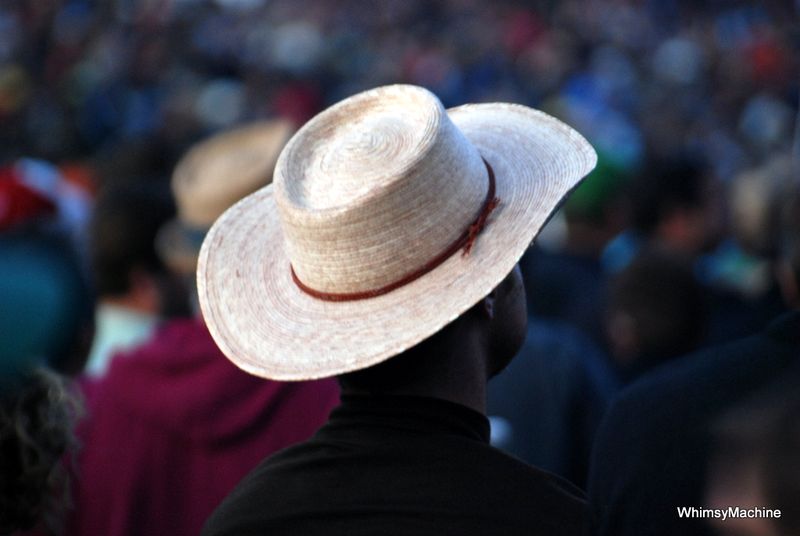
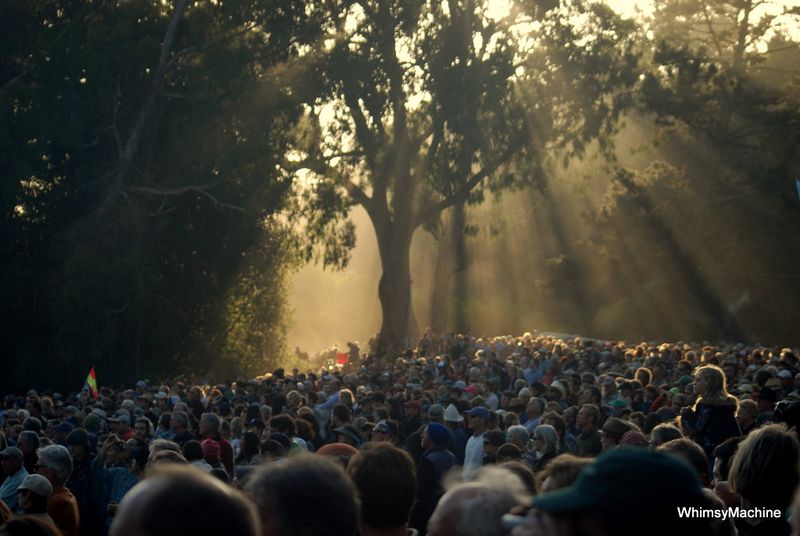
  • Where else can you find an Italian bluegrass band – "Red Wine" singing a bluegrass tune about Ireland! Listen to this on their MySpace or web page : Il Cielo D'Irlanda – one of my favorite tunes – great instrumentation.  Sang along to John Prine, danced along to Dry Branch Fire Squad, Ricky Skaggs and topped off Saturday with Steve Earle playing with the Bluegrass Dukes as fine a set of tunes as you've ever heard.

    DSC_0102 

    Windy but sunny, crisp and cool in Northern California…two beautiful
    days in Golden Gate Park.  Festival was likely oversubscribed this year
    – the crowds were crushing.  Mary Tilson on KPFA mentioned this
    afternoon that the estimates came in at around 700,000.  Sound on the
    Banjo stage was a little weak as you got towards the back. 
    Nonetheless, it was a wonderful celebration of music and the spirit of
    the Bay Area.  I took the long lens along for the ride and shot another
    series of "Festival Faces" that are now posted on my flickr stream as a set.

    DSC_0054

    As always, the setting sun at twilight in Speedway Meadows in Golden Gate Park is a magical hour of light and shadow – add music and it sometimes has seemed like something out of A Mid Summer Night's Dream.

    DSC_0021